

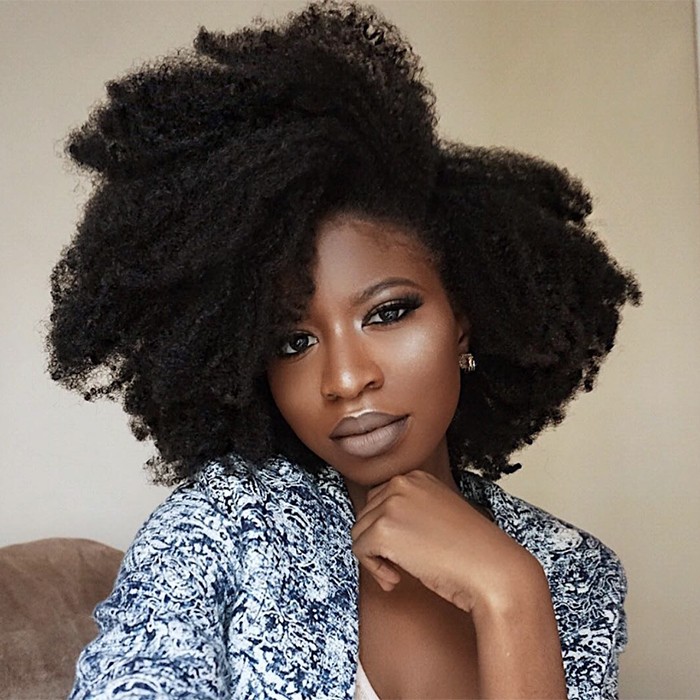
Social identities convey ideas of the self and relationships with others. Studies show that the component features of race, such as skin color, facial structure, and hair texture, are important factors that differentiate how Black-identified people are perceived and evaluated by others. For Black women and girls in particular, hair and a sense of identity may be intertwined, yet little research has examined the role of hair in developing social identity.
Hair, both style and texture, is a component feature of race that is widely un(der)examined, yet may be uniquely relevant and salient in the identities of Black girls and women. In this way, hair may be conceptualized as a site where intersectionality is made visible and measurable in adolescent identity development. Our work, in collaboration with the D.I.C.E lab, examines whether, when, and how Black girls reference hair when discussing their own identity.
Our results indicate that hair can (and often does) represent an embodied resistance against stereotypes that frame Black girls (and women) as undesirable and unworthy vis-à-vis their hair (Rogers et al. 2022). This research aligns with other literature investigating types of resistance strategies among Black girls and women, hair politics, and socialization/messaging about ideals of beauty in the media.